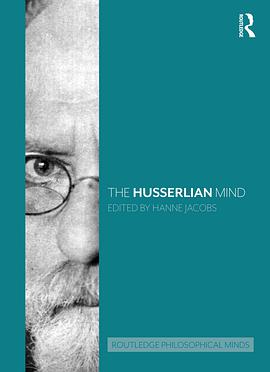
Hanne Jacobs / Dermot Moran …
Übersicht
Edmund Husserl (1859-1938) is widely regarded as the principal founder of phenomenology, one of the most important movements in twentieth-century philosophy. His work inspired subsequent figures such as Martin Heidegger, his most renowned pupil, as well as Jean-Paul Sartre and Maurice Merleau-Ponty, all of whom engaged with and developed his insights in significant ways. His work on fundamental problems such as intentionality, consciousness, and subjectivity continues to animate philosophical research and argument.
The Husserlian Mind is an outstanding reference source to the full range of Husserl's philosophy. Forty chapters by a team of international contributors are divided into seven clear parts covering the following areas:
Husserl's major works
Husserl's phenomenological method
phenomenology of consciousness
epistemology
ethics and social and political philosophy
philosophy of science
metaphysics.
Contained in these sections are chapters on many of the key aspects of Husserl's thought, including intentionality, transcendental philosophy, reduction, perception, time, self and subjectivity, personhood, logic, psychology, ontology, and idealism.
Offering an unparalleled guide to the enormous range of his thought, The Husserlian Mind is essential reading for students and scholars of Husserl, phenomenology, and the history of twentieth-century philosophy. It will also be of interest to those in related fields in the humanities, social sciences, and psychology and the cognitive sciences.
contents
Introduction Hanne Jacobs
Part 1: Major Works
1. The First Breakthrough: Psychology, Theory of Knowledge, and Phenomenology of Meaning in Logical Investigations (Pierre-Jean Renaudie)
2. "If I am to call myself a philosopher." Husserl’s Critical Phenomenology of Reason in Ideas I (Nicolas de Warren)
3. Cartesian Meditations: Husserl’s Pluralist Egology (Sara Heinamaa)
4. Formal and Transcendental Logic—Husserl’s Most Mature Reflection on Mathematics and Logic (Mirja Hartimo)
5. Husserl’s Crisis of the European Sciences: The "Teleological-historical Way" into Transcendental Philosophy (Dermot Moran)
Part 2: Phenomenological Method
6. Transcendental Idealism and The Copernican Turn in Kant and Husserl (Dominque Pradelle)
7. The Transcendental and the Eidetic Dimensions of Husserl’s Phenomenology: A Look at the Early Reception of Ideas I (Andrea Staiti)
8. Eidetic Description in Husserl’s Phenomenology (Rochus Sowa)
9. Reduction and Reflection after the Continental-Analytic Divide (Jacob Rump)
10. The Genetic Turn. Husserl’s Path toward the Concreteness of Experience (Jagna Brudzińska)
11. Husserl’s Transcendental Phenomenology (Steven Crowell)
Part 3: Phenomenology of Consciousness
12. Husserlian Intentionality (Christopher Erhard)
13. The Normative Turn of Perceptual Intentionality and its Metaphysical Consequences (or why Husserl was neither a disjunctivist nor a conjunctivist) (Maxime Doyon)
14. Back to Basics: Husserl Phenomenology of Inner Time-Consciousness – what it does and what it can do (Lanei Rodemeyer)
15. Normality as Embodied Space: The Body as Transcendental Condition of Experience (Maren Wehrle)
16. Husserl’s Phenomenology of Acts of Imagination (Michela Summa)
17. Emotions and Moods in Husserl’s Phenomenology (Denis Fisette)
18. Husserl’s Theory of Judgment and Its Contemporary Relevance (Chad Kidd)
19. Language: Its Ground in the World of Experience and Its Function in the Constitution of a Common World (Roberto Walton)
20. Husserl on Other Minds (Philip J. Walsh)
21. From the Ego to Pure Ego to Personal Ego (Dan Zahavi)
Part 4: Epistemology
22. Husserl’s Account of Cognition and the Legacy of Kantianism (Clinton Tolley)
23. Husserl on the Connections Among Knowledge, Intentionality, and Consciousness (Walter Hopp)
24. Sources of Knowledge: On the Variety and Epistemic Force of Experiences (Philipp Berghofer)
25. Husserl’s Complex Concept of Objectivity (John J. Drummond)
26. Husserl on Epistemic Agency (Hanne Jacobs)
Part 5: Ethics and Social and Political Philosophy
27. The Battlefield of Reason and Feeling. Husserl on the History of Philosophy in Search of a Phenomenological Ethics (Inga Römer)
28. The Ethics of Husserl and His Contemporaries (Lipps, Pfänder, and Geiger) (Mariano Crespo)
29. Evaluative Experience: Intentional Complexity and Moral Teleology (Sonja Rinofner-Kreidl)
30. The Person as a Fragile Project. On Personhood and Practical Agency in Husserl (Sophie Loidolt)
31. Husserl on Social Groups (Sean Petranovich)
32. Husserl’s Idea of Philosophy as a Universal, Strict Science and its Ethical Meaning in the Context of the Crises of Today. Reflections from Outside of Europe (Esteban Marin Avila)
Part 6: Philosophy of Science
33. Husserl’s Theory of Science (Marco Cavallaro)
34. Phenomenological Psychology as Philosophy of Mind (Jeff Yoshimi)
35. Phenomenology and History (David Carr)
36. Physics with a Human Face: Husserl and Weyl on Realism, Idealism, and the Nature of the Coordinate System (Harald Wiltsche)
Part 7: Metaphysics
37. The Development of Husserl’s Concept of Metaphysics (Daniele De Santis)
38. Mapping Husserl’s Ontology and its Boundaries (Claudio Majolino)
39. From Institution to Critique: Husserl’s Concept of Teleology (Timo Miettienen)
40. Phenomenology, Teleology, and Theology (Emiliano Trizio)
Index