World War II Tactical Camouflage Techniques
NeoDB Google Books Douban Goodreads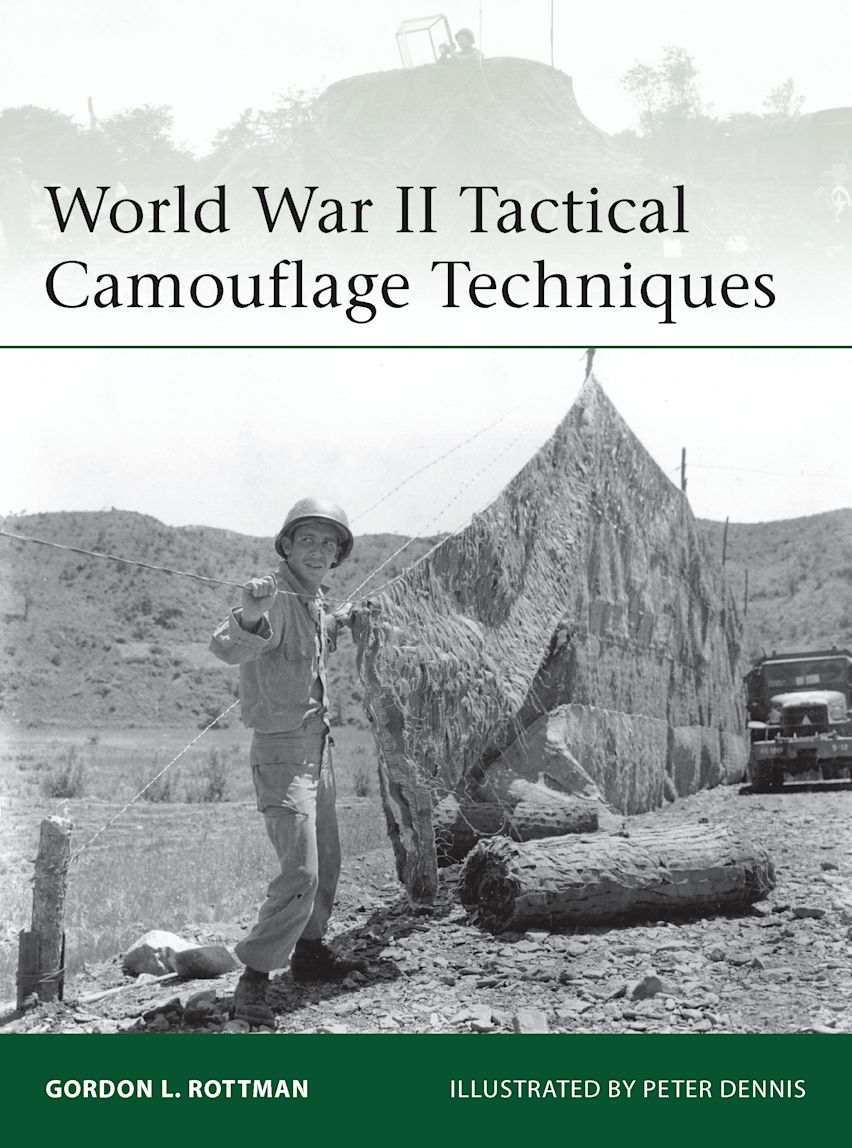
Gordon L. Rottman / Peter Dennis
overview
This book explains and illustrates the actual materials and techniques adopted (both successfully and unsuccessfully) by tactical units – i.e. the concealment of personnel, weapons, equipment, field positions, and movement by infantry riflemen and weapons crews, artillerymen, and vehicle crews.
It covers all areas and seasons in the European and Mediterranean theaters of operations, for the US, British, German, and Soviet armies. It includes camouflage of the person, personal equipment, and weapons; natural materials and “expedient” techniques; issued camouflage materials such as nets, ponchos, etc; the principles of camouflaging equipment and vehicles, of positioning and terrain integration, the effects of light and shadow, and the use of decoy and dummy positions.
Featuring meticulous full-color artwork and specially selected period photographs, this absorbing study casts new light on the camouflaging techniques developed by the major armies of World War II on a host of European battlefields.
contents
The basic principles
Camouflage techniques: positioning and terrain integration – light conditions
Camouflaging the soldier: face and hands – uniforms – personal equipment and weapons
Fighting positions: expedient materials – field camouflage items – netting
Camouflage painting of vehicles – artillery - equipment - facilities
Camouflaging and concealment of assembly areas and routes
Examples of ineffective camouflage
Use of dummy and decoy equipment and positions
Bibliography
Index