World War II Combat Reconnaissance Tactics
NeoDB Goodreads Douban Google Books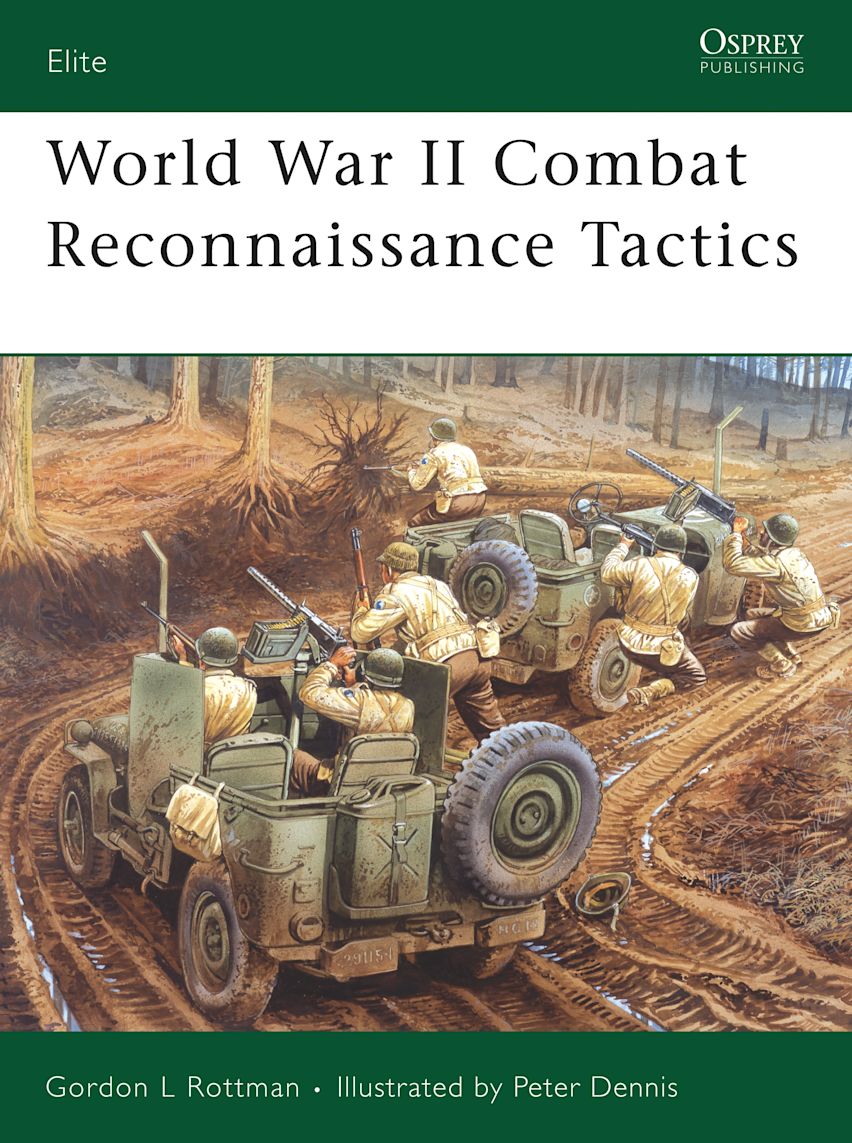
Gordon L. Rottman / Peter Dennis
overview
Like so many aspects of battle, 'reconnaissance' is a familiar term, but few civilians have any idea how it is actually done or what it involves. In human terms, 'combat reconnaissance' means the first soldiers to go forward ahead of the main body of forces - either creeping through the landscape or, for larger units, actually driving forward into the unknown in fast, light armoured vehicles and jeeps festooned with machine-guns - until they run into the enemy. When they do they have to try to report his strength and position, without getting killed by the first burst of fire. Somebody has to do this at the start of every single action of any war - whether it's a handful of men crawling, or a column of armoured cars racing. This book explains how the major armies did it in World War II, with what equipment used and in which ways.
contents
'NOT A STEP WITHOUT RECONNAISSANCE ': The purposes and means of reconnaissance; The shortcomings of maps and photographs; The time factor·RECONNAISSANCE MISSIONS:
Information collection and assessment; Patrol tasks (point reconnaissance; area reconnaissance; route reconnaissance; defensive patrolling; outposts and out-guards; other types of patrol)·DIVISIONAL RECONNAISSANCE UNITS: Capabilities and missions; Unit organization·MOBILITY: Foot movement;Snow; Water obstacles; Horses; Bicycles; Motorcycles; Light trucks and cars; Armoured vehicles·WEAPONS AND EQUIPMENT: Weapons (the weight/firepower balance);
Compasses; Binoculars; Maps; Clothing and camouflage;Communications (AM radios; FM radios; field telephones; panels; smoke and pyrotechnics)·TACTICS AND TECHNIQUES: Composition of patrols; The rifle squad;
Stealth vs firepower·NATIONAL COMPARISONS: United States; Great Britain; Soviet Union; Germany; Japan·FURTHER READING·PLATE COMMENTARIES· INDEX